Context
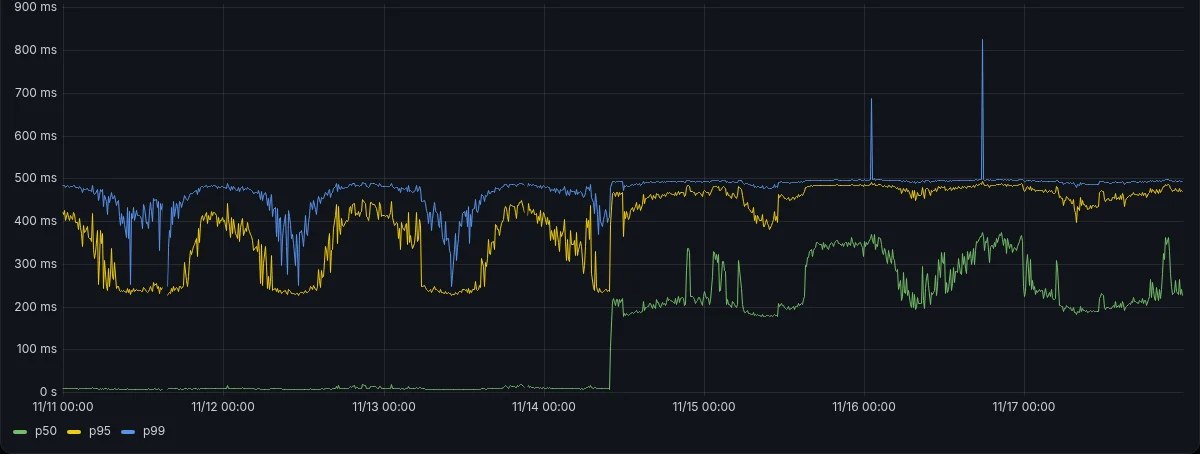
A team project for CMU's Machine Learning in Production course: run a recommendation service for a movie-streaming platform with live users for a whole semester. Every request must get 20 films inside 600 ms, and the service has to stay up while it is monitored, retrained and A/B tested. My parts were the cold start and the deployment.
Cold start
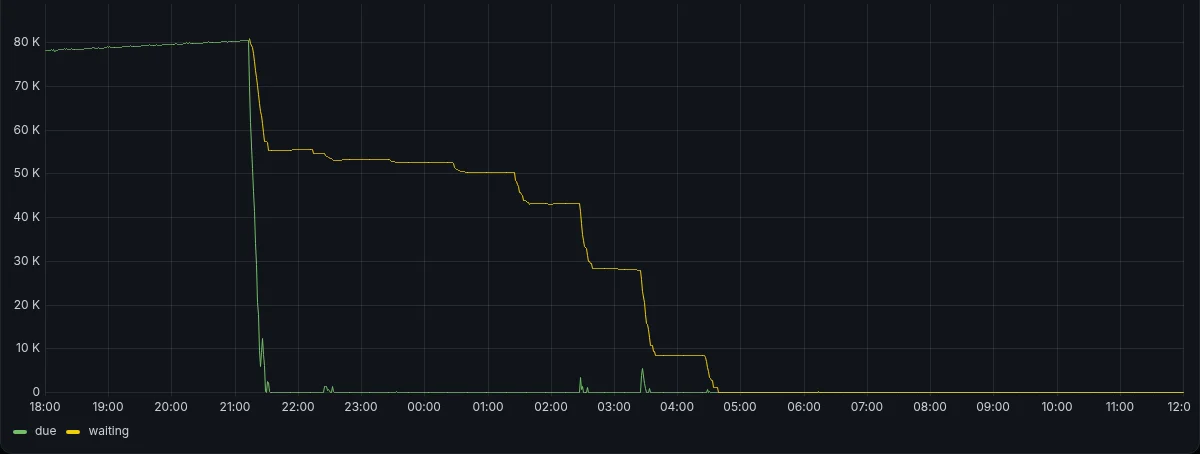
A ranking model only knows users who were in its training data, and new users arrive all the time. At signup each user writes a sentence or two about the films they like and dislike. A background worker sends that text to Jev once, stores the answers as a taste profile, and a ranker scores the catalogue from it in code. A new user's first request comes about five minutes after signup, so the profile is almost always ready, and no request ever waits on the model.
Jev by TypeSafe
Jev is TypeSafe's first System One model, released in September 2026. It doesn't write text. It answers typed questions with probabilities, such as whether this person wants or avoids horror films, with "not stated" as an explicit option so silence never counts as dislike. The answer always fits the schema, so the ranker never meets a malformed profile, and the probabilities go straight into a scoring formula. Twenty-four questions cost about 2,400 input tokens and return in a median 169 ms, which comes to about $1 a day for every new user. A usability question screens out descriptions like "idk".
Operations
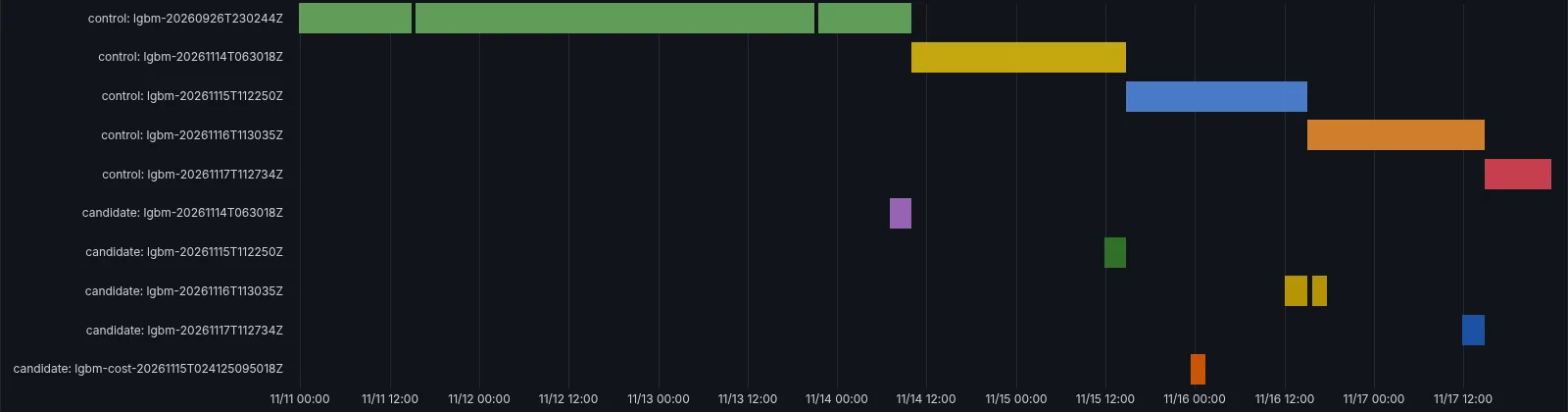
LightGBM LambdaMART ranks the users the model knows. A new model is retrained each day, served first as a canary candidate beside the champion, and promoted without downtime. Grafana dashboards track availability, latency, model versions, drift and the cold-start backlog.